
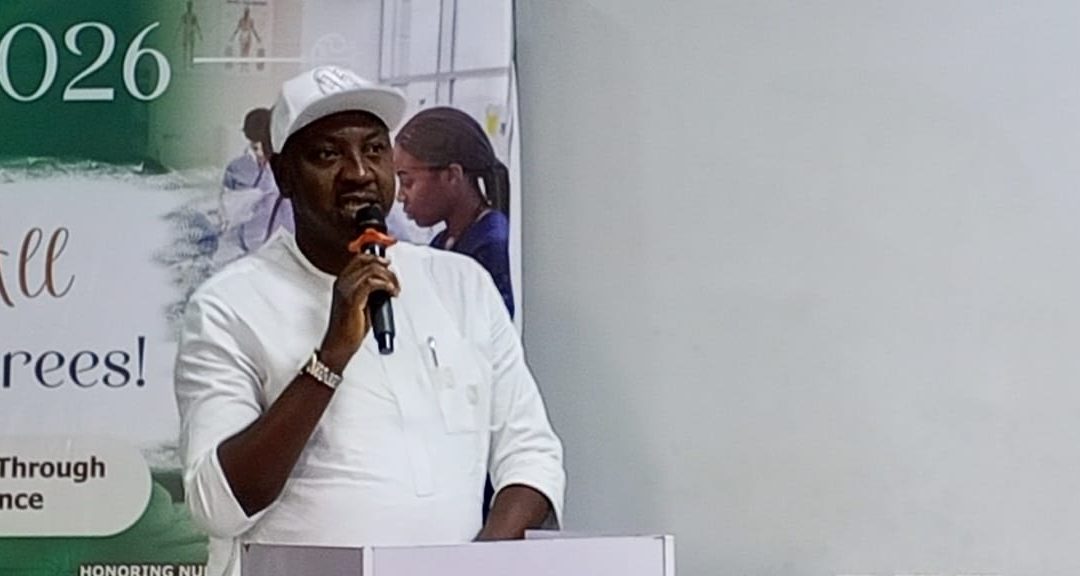
In a decisive step toward strengthening fiscal discipline, transparency, and accountability, the Edo State Ministry of Finance and the Edo State Internal Revenue Service (EIRS) on Monday, 24th August, 2026, at the John Odigie Oyegun Public Service Academy (JOOPSA) held a joint one-day stakeholders’ engagement session.
The session brought together Heads of Ministries, Departments, Agencies and Parastatals which includes Honourable Commissioners, Permanent Secretaries and Directors of Finance to chart a smooth operational roadmap for the newly enacted Edo State Revenue Consolidation Account (Establishment and Operation) Law, 2026.
The reform framework centralizes public financial management by establishing a unified Treasury Single Account (TSA) system. Under the law, all state revenues will be swept into a single Revenue Consolidation Account electronically integrated with EIRS-approved collection platforms for real-time receipting, monitoring, and reconciliation.
To enforce compliance, the law mandates all affected MDAs to disclose all revenue bank accounts to the Ministry of Finance within 14 days, sweep existing balances into the approved Internally Generated Revenue (IGR) account, close the old accounts, and submit hard and soft copies of their revenue statements covering 1 January 2025 to date for a comprehensive audit.
In his address, the Honourable Commissioner of Finance Engr. Emmanuel Okoebor emphasized that the objective of the reform is straightforward. “Every naira belonging to Edo State must be properly collected, properly accounted for, and deployed in the interest of the people of Edo State.”
He underscored the administration’s drive under Governor Monday Okpebholo to eliminate unauthorized retention of funds, warning that revenue leakages deprive citizens of crucial infrastructure such as roads, schools, healthcare, and security.
Emphasizing the personal responsibility placed on principal officers by the new legislation, Okoebor declared that implementing the law is a collective duty, encouraging heads of institutions to actively address operational concerns so that every MDA can comply seamlessly.
Driving the operational execution of the framework, the EIRS has been positioned as the central coordinating authority supervising automated collections, monitoring remittances, and reporting financial irregularities across the state.
In his remarks, Executive Chairman EIRS John Osirenimhe Odior, FCA, ACTI, described the Law as a historic milestone that aligns Edo State with national financial discipline standards.
Addressing historical resistance to centralized revenue systems, the EIRS boss noted that no individual or agency holds an inherent entitlement to state revenue accounts. Reminding public officers that government retains the prerogative to direct public finances, he charged all leadership teams to embrace harmonization, cash-less collections, and direct integration with the EIRS portal, reiterating that full cooperation is mandatory to advance the collective growth and prosperity of Edo State.
The session gave opportunity to participants to ask questions, raise operational concerns as well as seek clarifications.
The engagement concluded with a joint call from the revenue agencies for full corporations across all government arms to guarantee a seamless transition into the consolidated revenue framework as well as commitments of support for the new framework by the respective MDAs leadership.